
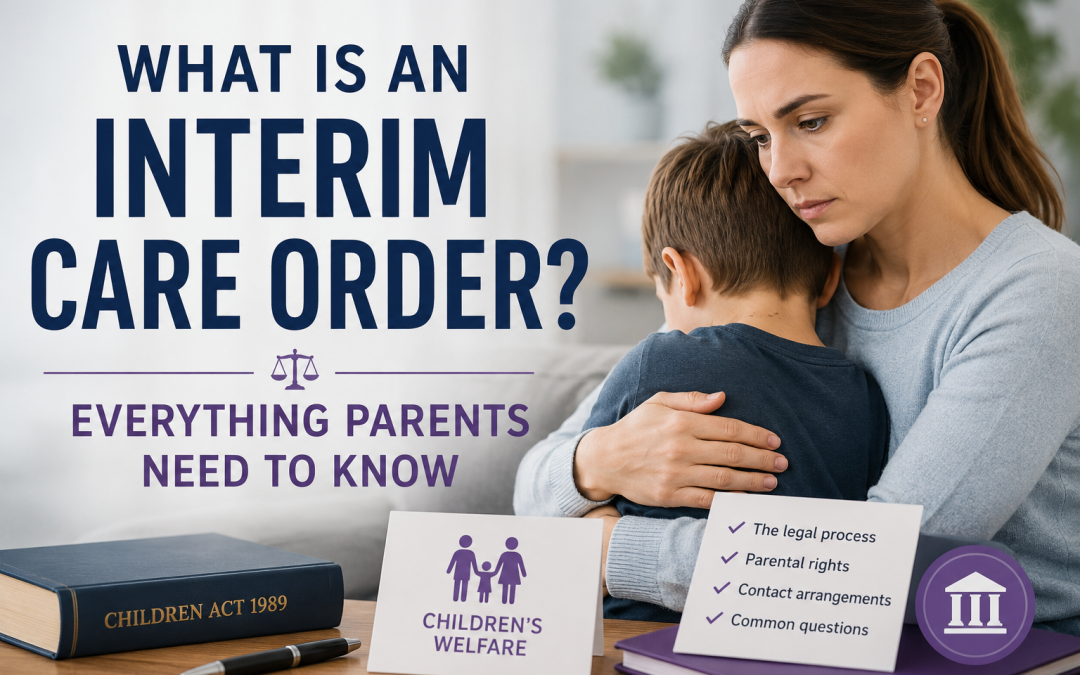
If social services have become involved with your family and an Interim Care Order has been mentioned, it is understandable to have questions about what this means for you and your child.
An Interim Care Order is a temporary court order that gives a local authority parental responsibility for a child while care proceedings are ongoing. It does not automatically mean that a child will be permanently removed from their parents. Instead, it allows arrangements to be put in place while the court considers the evidence and decides what should happen in the longer term.
Understanding the process, your parental rights and the decisions the court can make is extremely important. If you are currently involved in proceedings, getting advice from an experienced family law solicitor as early as possible can help you understand your position.
HRS Family Law Solicitors provides specialist advice and representation for parents involved in Interim Care Order proceedings.
What Is an Interim Care Order?
An Interim Care Order, often shortened to ICO, is a temporary order made by the Family Court under the Children Act 1989.
When an Interim Care Order is granted, the local authority shares parental responsibility for the child with those who already have it, usually the child’s parents.
This gives the local authority the legal power to make certain decisions about the child’s care while court proceedings continue.
Importantly, an Interim Care Order is not the same as a final Care Order. It is intended to provide temporary arrangements while the court gathers information, considers assessments and determines what outcome is in the child’s best interests.
Why Might an Interim Care Order Be Made?
A local authority may apply for an Interim Care Order when it believes there are serious concerns about a child’s welfare and that the child may be suffering, or at risk of suffering, significant harm.
Concerns could potentially relate to issues such as neglect, domestic abuse, substance misuse or other circumstances affecting a child’s safety and wellbeing.
However, an application from a local authority does not automatically result in an Interim Care Order.
The Family Court must consider the evidence and determine whether the legal requirements for making the order are met.
Parents have the right to obtain legal representation and respond to the local authority’s concerns during the proceedings.
Does an Interim Care Order Mean My Child Will Be Taken Away?
Not necessarily.
One of the most common concerns parents have when hearing the words “Interim Care Order” is that their child will immediately be removed from their care.
An Interim Care Order gives the local authority shared parental responsibility, but where a child lives will depend upon the circumstances of the individual case and the decisions made by the court.
In some situations, a child may continue living with a parent while an Interim Care Order is in place. In others, the court may approve an alternative arrangement, such as the child living with another family member or foster carers.
Every case is different, which is why parents should seek legal advice based on their particular circumstances.
You can find further information about what an ICO means for families in our guide to Interim Care Orders.
What Happens When the Local Authority Applies for an Interim Care Order?
Care proceedings begin when a local authority makes an application to the Family Court.
Parents should receive information explaining why the application has been made and outlining the concerns the local authority has about the child’s welfare.
The court will then consider the case.
During proceedings, the court may consider evidence from social workers, parents and other relevant professionals. Assessments may also be undertaken to help the court understand the child’s circumstances and determine what arrangements would best protect their welfare.
Parents will have the opportunity to obtain legal representation and put forward their position.
Because decisions made during care proceedings can have a significant impact on the whole family, it is important to engage with the process and obtain specialist legal advice.
How Long Does an Interim Care Order Last?
Interim Care Orders are temporary measures used while care proceedings are continuing.
The court will manage the case and determine what further hearings, assessments or evidence are required before a final decision can be reached.
An Interim Care Order can therefore remain relevant while the proceedings continue, subject to the applicable legal rules and decisions of the court.
The exact timescale will depend upon the circumstances and complexity of the case.
Your solicitor can explain the expected timetable and any important upcoming hearings in your particular proceedings.
What Parental Rights Do I Have During an Interim Care Order?
Parents do not automatically lose parental responsibility when an Interim Care Order is made.
Instead, the local authority gains parental responsibility and shares it with others who already hold it.
This distinction is important.
Parents remain involved in their child’s life, although the local authority may have greater powers to make decisions where necessary to safeguard and promote the child’s welfare.
Depending on the circumstances, this could affect decisions about where the child lives, their education, medical treatment and other aspects of their care.
Parents are also entitled to legal advice and representation during care proceedings.
If you disagree with decisions being proposed by the local authority, speak to your solicitor as soon as possible rather than waiting until the next court hearing.
Can I Oppose an Interim Care Order?
Parents can put forward their position when a local authority applies for an Interim Care Order.
Your solicitor can review the local authority’s evidence, explain the concerns being raised and advise you on the options available.
This may involve presenting evidence to the court, responding to allegations or proposing alternative arrangements for the child’s care.
The court’s overriding consideration is the child’s welfare.
For this reason, parents should focus on addressing the concerns raised and demonstrating how their proposed arrangements meet their child’s needs.
Specialist legal representation can be particularly important at this stage because the decisions made early in proceedings may influence how the case develops.
Can I Have Contact with My Child During an Interim Care Order?
An Interim Care Order does not automatically prevent a parent from having contact with their child.
Contact arrangements will depend upon the circumstances of the case and what is considered safe and appropriate for the child.
Contact could potentially be supervised or subject to particular conditions.
Where parents are unhappy with the contact being offered, they should discuss this with their solicitor. Your solicitor can communicate with the local authority and, where necessary, raise the issue with the court.
Maintaining a relationship between a child and their parents can be an important consideration during care proceedings, provided that contact is consistent with the child’s welfare.
Can an Interim Care Order Be Changed?
Circumstances can change while care proceedings are ongoing.
New assessments may be completed, additional evidence may become available or parents may make significant changes in response to concerns raised by social services.
Your solicitor can advise you about whether there are grounds to ask the court to reconsider particular arrangements or orders.
Rather than assuming an Interim Care Order means the outcome of the case has already been decided, parents should continue engaging with their solicitor, social workers and any assessments or programmes that form part of the proceedings.
What Happens After an Interim Care Order?
The purpose of the interim period is to allow the court to obtain the information it needs to make a longer-term decision about the child.
Possible outcomes will depend entirely on the circumstances of the individual case.
The court may ultimately decide that a child can remain with or return to a parent, potentially with appropriate support. Other cases may result in the child living with relatives or another longer-term arrangement being made.
In some circumstances, the local authority may seek a final Care Order.
No parent should assume that the existence of an Interim Care Order determines the final outcome.
The court must consider the available evidence and decide what arrangement best meets the child’s welfare needs.
Do I Need a Solicitor for an Interim Care Order?
If a local authority is applying for an Interim Care Order concerning your child, obtaining specialist legal advice should be a priority.
Care proceedings can involve complex legal issues and potentially life-changing decisions.
A family law solicitor can explain what the local authority is asking the court to do, review the evidence, advise you about your rights and represent you during court hearings.
They can also help you understand what is expected of you throughout proceedings and ensure your position is properly presented to the court.
Get Advice About an Interim Care Order
Receiving court documents or being told that social services intend to apply for an Interim Care Order can be extremely worrying.
However, an Interim Care Order is an interim measure rather than a final decision about your child’s future.
Understanding the concerns being raised, participating fully in proceedings and obtaining specialist legal advice can help you make informed decisions throughout the process.
HRS Family Law Solicitors has experience supporting parents through care proceedings and disputes involving social services.
If you need advice about an existing or proposed order, learn more about Interim Care Orders and your legal rights and speak to the HRS Family Law Solicitors team about your circumstances.
Meta Title: What Is an Interim Care Order? A Guide for Parents | HRS
Meta Description: Learn what an Interim Care Order means, why it may be issued, how long it lasts and your rights as a parent during care proceedings.