
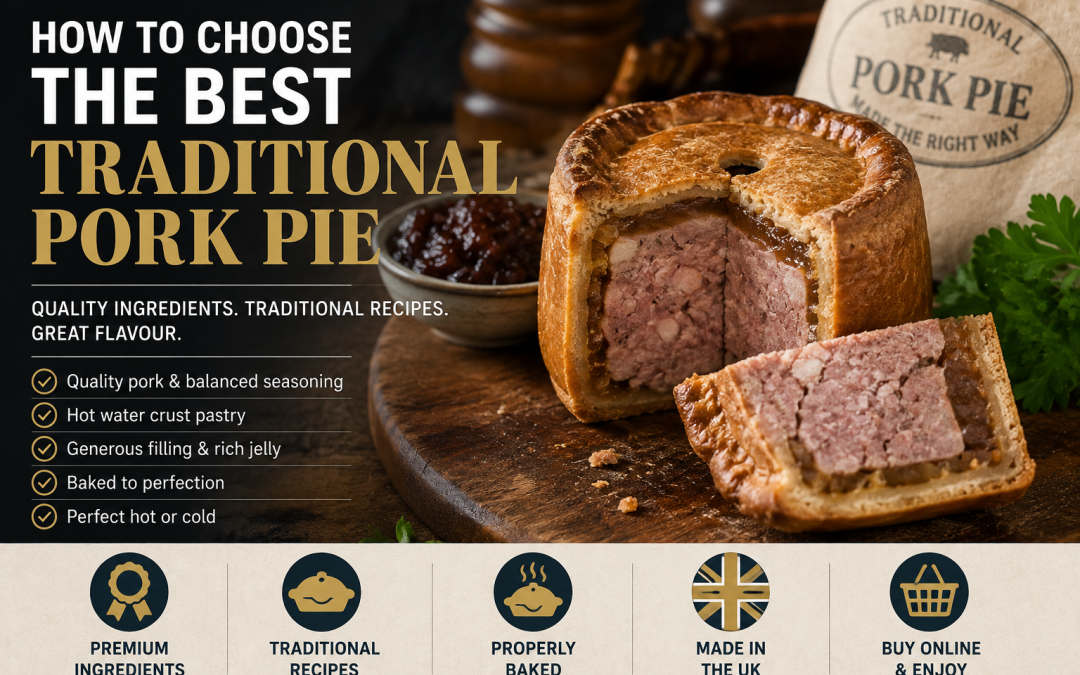
A great traditional pork pie should have a crisp, golden hot water crust pastry, a generous filling of well-seasoned pork and the distinctive savoury jelly that helps give a classic pork pie its characteristic texture and flavour.
Although pork pies may appear relatively simple, there can be a considerable difference between a mass-produced pie and one made using traditional methods and carefully selected ingredients.
From the quality of the pork and seasoning to the pastry, baking process and balance of flavours, there are several things to consider when choosing a premium pork pie.
If you’re looking to enjoy this British classic at home, you can explore Toppings Pies’ range of traditional pork pies available to buy online.
What Is a Traditional Pork Pie?
A traditional pork pie is a British savoury pie typically made using seasoned pork enclosed within hot water crust pastry.
Unlike many other meat pies, pork pies are generally designed to be eaten cold rather than served hot with gravy.
The pastry needs to be strong enough to hold the meat filling while baking and maintain its shape once the pie has cooled.
Another distinctive feature is the jelly traditionally added to the pie. This fills spaces between the cooked meat and pastry, helping create the familiar texture associated with a traditional pork pie.
The result should be a satisfying combination of crisp pastry, succulent pork, seasoning and savoury jelly.
What Ingredients Are Used in a Traditional Pork Pie?
The precise recipe will vary between producers, but the fundamental ingredients are relatively straightforward.
The filling is primarily pork combined with carefully balanced seasoning. Different recipes may incorporate various cuts of pork and their own particular blend of herbs and spices.
The pastry is traditionally a hot water crust.
Hot water crust pastry differs from the pastry used for many sweet or savoury pies. It is made to be robust enough to support a substantial meat filling while still providing an enjoyable texture when eaten.
Then there is the jelly.
Once the pie has been baked and begins to cool, savoury jelly can be introduced into the space between the filling and pastry.
When these elements are balanced properly, none should overpower the others.
You should be able to taste the pork, enjoy the seasoning and get a satisfying contrast between the meat and pastry.
Why Is Hot Water Crust Pastry Important?
The pastry is one of the defining characteristics of a traditional pork pie.
Historically, hot water crust pastry provided a strong casing that could hold a substantial meat filling during baking.
Today, it remains an important part of what makes a traditional pork pie distinctive.
A good crust should be firm enough to maintain the shape of the pie without being unpleasantly hard or dry.
The outside should have an attractive golden appearance, while the pastry should complement rather than dominate the filling.
When browsing traditional pork pies online, the quality of the pastry is therefore just as important as the filling itself.
How Are Traditional Pork Pies Made?
Making a traditional pork pie involves several stages.
First, the pork filling is prepared and seasoned.
The hot water crust pastry is then made and shaped to create the pie casing. The pork mixture is packed inside before a pastry lid is added and sealed.
A hole is traditionally left in the top of the pie.
The assembled pie is then baked until the pastry develops its characteristic golden colour and the pork filling is thoroughly cooked.
Once baked, the pie is cooled before the savoury jelly is introduced through the opening in the top.
The jelly fills the small spaces between the meat and pastry before setting as the pie cools.
The finished pork pie can then be chilled and enjoyed cold.
Although the ingredients may appear straightforward, achieving the right balance between pastry, pork, seasoning and jelly requires experience and attention to detail.
What Does a Good Pork Pie Taste Like?
A premium pork pie should deliver a combination of flavours and textures rather than simply tasting of pastry or heavily processed meat.
The pork should be the main attraction.
It should have a satisfying texture and enough seasoning to enhance its natural flavour without becoming excessively salty or overpowering.
The pastry should provide a contrasting texture and a rich, savoury flavour of its own.
The jelly adds moisture and another layer of savoury flavour.
When all three components work together, the result is rich and satisfying without any individual element overwhelming the pie.
What Should You Look for When Buying a Pork Pie?
There are several factors worth considering when choosing a traditional pork pie.
Quality of the Pork
Start with the filling.
A traditional pork pie should contain a generous amount of pork. Look for information about the ingredients and how the filling has been prepared.
The quality and seasoning of the meat will have a significant impact on the final flavour.
The Pastry
Look for a well-baked, golden crust that appears substantial enough to hold the filling.
Traditional hot water crust pastry should provide structure while remaining enjoyable to eat.
The Seasoning
Seasoning is one of the areas where individual pork pie recipes can differ significantly.
Some recipes are relatively simple, allowing the flavour of the pork to dominate, while others use distinctive combinations of herbs and spices.
There is no single correct flavour profile. Much comes down to personal preference.
Meat-to-Pastry Ratio
A premium pork pie should feel generously filled.
Too much pastry can make the pie dry and heavy, while insufficient pastry may fail to provide the characteristic texture that makes a pork pie distinctive.
Finding the right balance is key.
Freshness
Freshness is particularly important when ordering pork pies online.
Check information about delivery, storage and shelf life so you know how your pies should be stored when they arrive.
Are All Traditional Pork Pies the Same?
No.
Pork pies have a long history in Britain, and different regions and producers have developed their own recipes and techniques.
Perhaps the most famous regional association is the Melton Mowbray pork pie.
Melton Mowbray pork pies have specific characteristics and protected status, meaning products using the name must comply with defined requirements.
However, traditional pork pies are produced throughout Britain.
Independent producers and bakeries may have recipes that have been refined over many years, with differences in seasoning, pastry thickness, size and texture.
This variety is part of what makes exploring different pork pies so enjoyable.
What Is the Difference Between a Traditional and Flavoured Pork Pie?
Traditional pork pies generally allow the combination of pork, seasoning, pastry and jelly to provide the main flavour.
Flavoured varieties introduce additional ingredients to create a different experience.
Depending on the producer, this could include cheeses, pickles, herbs, spices or other complementary ingredients.
Both have their place.
If you want to experience the classic flavour and texture of a pork pie, starting with a traditional recipe is a good choice.
You can then explore different flavours once you know which style of pork pie you prefer.
Why Buy Pork Pies Online?
Buying pork pies online makes it possible to order from specialist producers without being limited to what is available in your nearest supermarket.
This can be particularly useful if you are looking for traditionally made or premium pork pies.
You can compare varieties, sizes and flavours before choosing the pies that appeal to you.
Online ordering is also convenient when purchasing pork pies for events, celebrations, buffets, picnics or gifts.
Toppings Pies offers a selection of traditional pork pies to buy online, making it easy to have freshly prepared pies delivered directly to your door.
How Should You Serve a Traditional Pork Pie?
One of the advantages of a pork pie is its versatility.
It can be enjoyed on its own as a snack or incorporated into a larger meal.
Traditional accompaniments include:
-
Pickles
-
Chutney
-
Mustard
-
Cheese
-
Salad
-
Crusty bread
-
Pickled onions
Pork pies are also ideal for picnics, lunchboxes and buffets because they are traditionally eaten cold.
For a classic British lunch, try serving slices of pork pie alongside mature cheese, chutney, pickled onions and a fresh salad.
How Should Pork Pies Be Stored?
Always follow the storage instructions provided by the producer.
Fresh pork pies will generally need to be refrigerated and eaten within their stated shelf life.
If you have ordered several pies, check whether the particular products are suitable for freezing and follow the producer’s instructions for freezing and defrosting.
Correct storage helps maintain the quality of the pastry and filling while ensuring the product remains safe to eat.
What Size Pork Pie Should You Choose?
The right size depends on how you plan to serve it.
Individual pork pies are convenient for lunches, picnics or individual portions.
Larger pies can be particularly useful for sharing, buffets, parties and family occasions because they can be sliced into portions.
If you are ordering for an event, consider how many guests you are serving and whether the pork pie will be the main feature or one item among a wider selection of food.
How Can You Tell If You’re Buying a Premium Pork Pie?
Price alone does not necessarily indicate quality.
Instead, look at the ingredients, production methods and the company making the pie.
A premium pork pie should demonstrate attention to the important details: good-quality pork, balanced seasoning, properly prepared pastry and a generous filling.
It should look appetising when sliced and deliver a clear contrast between the crust and filling.
Buying from a specialist pie producer also gives you the opportunity to choose products created specifically around traditional pie-making rather than simply selecting from a limited supermarket range.
Finding Your Perfect Traditional Pork Pie
Choosing the best traditional pork pie ultimately comes down to quality and personal taste.
Some people prefer a thicker, firmer crust, while others prioritise a particularly generous meat filling. Some enjoy stronger seasoning, while others want the natural flavour of the pork to remain at the centre of the pie.
Trying different varieties is often the best way to discover what you enjoy most.
Look for quality ingredients, well-made hot water crust pastry, a generous pork filling and balanced seasoning. Then consider the size and style that best suits how you intend to serve it.
Whether you’re planning a picnic, preparing a buffet or simply fancy a proper British savoury treat, explore Toppings Pies’ range of traditional pork pies available to order online to find your favourite.