
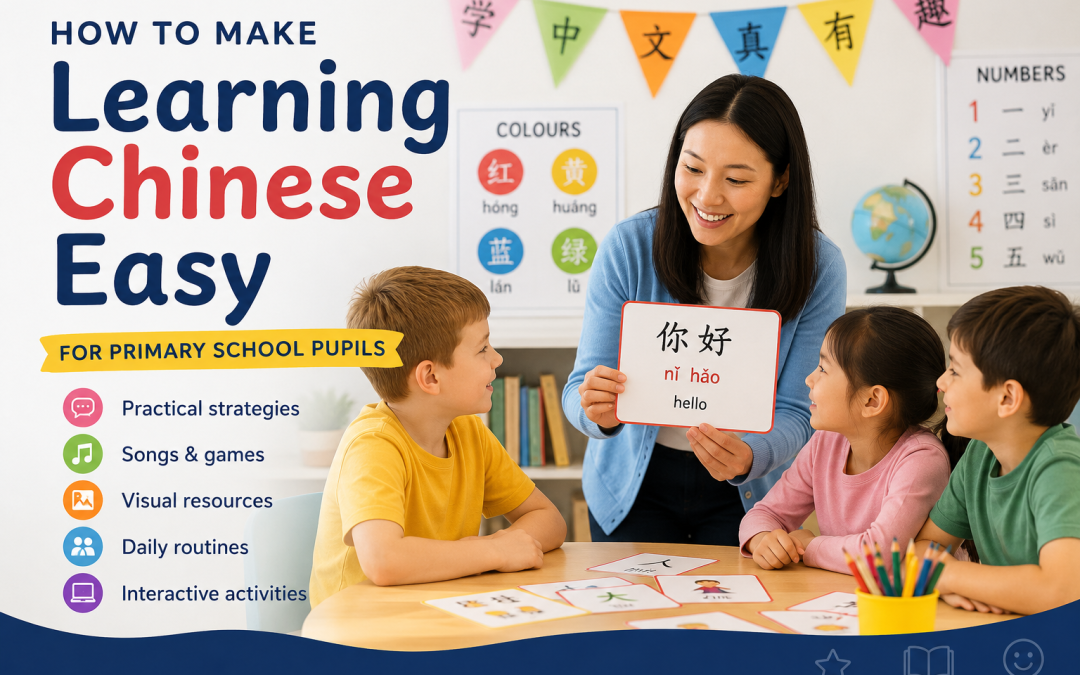
Introducing a new language to primary school pupils can be incredibly rewarding, but it can also present challenges for teachers. Mandarin Chinese in particular may initially seem unfamiliar to children because of its tones, characters and different writing system.
However, learning Chinese does not need to feel difficult or overwhelming.
With the right teaching methods, Mandarin can become an enjoyable and accessible part of the school day. The key is to introduce the language gradually, reinforce learning regularly and give children plenty of opportunities to hear, see, say and use new vocabulary.
For schools and teachers looking to introduce Mandarin, hihilulu provides structured Chinese learning resources designed specifically for young learners. By combining classroom teaching with digital resources, games and interactive activities, teachers can create a learning environment where children build their Chinese skills naturally and confidently.
Start with Useful, Familiar Vocabulary
One of the easiest ways to introduce Mandarin to primary school pupils is to begin with words and phrases connected to their everyday lives.
Rather than presenting pupils with long vocabulary lists, teachers can concentrate on small groups of useful words around familiar themes.
Good starting points might include:
-
Numbers
-
Colours
-
Family members
-
Animals
-
Food and drink
-
Days of the week
-
Classroom objects
-
Greetings
-
Weather
-
Hobbies
Working around a theme helps pupils understand how words relate to one another and gives teachers opportunities to create activities around the vocabulary.
For example, a lesson about colours could involve identifying coloured objects around the classroom, while a lesson about food could include pupils saying which foods they like or dislike.
The aim is to make Mandarin feel relevant rather than abstract.
Use Repetition to Build Confidence
Repetition is particularly important when children are learning a new language.
Pupils need to encounter words multiple times before they can confidently recognise and use them. However, repetition does not have to mean repeatedly reading the same vocabulary list.
Teachers can revisit vocabulary through different activities.
A new Mandarin word might first be introduced verbally, then displayed alongside a picture, used in a game, included in a song and revisited during a later lesson.
This repeated exposure gives pupils several opportunities to recognise and use the language without making lessons feel repetitive.
hihilulu’s approach to learning Chinese is designed around progressive learning, allowing children to build from fundamental components into characters, words, phrases and eventually complete sentences.
The important principle for teachers is to build gradually. Children do not need to understand everything immediately. Each lesson can add another small layer to what they already know.
Introduce Mandarin Through Songs and Rhymes
Songs are an excellent resource for primary language lessons because they naturally encourage repetition.
Simple songs can help pupils remember Mandarin vocabulary, pronunciation and sentence patterns while making the learning experience enjoyable.
Teachers could introduce songs covering numbers, greetings, animals, colours or everyday actions. Adding movements or gestures can make the activity even more memorable, particularly for younger pupils.
Songs can also remove some of the pressure pupils may feel when speaking Mandarin individually. Singing as a class allows everyone to practise pronunciation together before being asked to use words independently.
Over time, this can help pupils become more comfortable hearing and speaking Mandarin.
Turn Vocabulary Practice into Games
Games are another effective way of making Chinese accessible to primary school pupils.
A simple matching activity, for example, could ask pupils to match Mandarin vocabulary to pictures. Teachers could also use bingo, memory games, flashcards, quizzes, role play and classroom challenges.
Games encourage pupils to recall vocabulary rather than simply read it.
Digital activities can provide another useful layer. hihilulu’s resources for teachers include an online teaching platform with interactive lessons, speech training, progress tracking and engaging learning content.
Using these types of resources alongside teacher-led activities can provide pupils with different ways to practise the same language.
Make Learning Visual
Visual resources are particularly valuable when introducing Mandarin.
Pictures can help children understand the meaning of new vocabulary without relying entirely on English translations.
Teachers can use photographs, illustrations, flashcards, posters and classroom displays to reinforce vocabulary throughout the school day.
Chinese characters themselves also provide opportunities for visual learning.
Rather than presenting characters as complicated symbols that pupils need to memorise, teachers can gradually introduce how characters are constructed.
The hihilulu Chinese learning approach uses Professor Bellassen’s Snowballing Method. It starts with 125 components before progressively building these into characters, words, phrases and full sentences.
This structured approach can make written Chinese feel much more manageable for young learners.
Make Mandarin Part of the Daily Routine
Language learning does not have to be limited to one dedicated lesson each week.
Introducing small amounts of Mandarin into everyday classroom routines can give pupils valuable additional exposure without taking significant time away from other subjects.
Teachers might greet the class in Mandarin each morning, count pupils in Chinese during registration or use Mandarin when discussing the date, day of the week or weather.
Simple classroom instructions can gradually be introduced too.
The more frequently children encounter familiar Mandarin words, the more natural the language begins to feel.
These activities do not need to take long. Even a few minutes of Mandarin every day can help reinforce what pupils have already learnt.
Encourage Pupils to Use Mandarin
Children need opportunities to actively use a language rather than simply listen to it.
Pair and group activities are particularly useful for this.
After learning basic greetings, pupils could practise introducing themselves to a partner. After studying numbers, they could ask each other their age. A food topic could involve pupils asking classmates which foods they like.
Teachers can gradually increase the complexity as pupils become more confident.
Creating opportunities for genuine communication gives vocabulary a purpose and helps children understand that Mandarin is a language they can actually use.
Interactive activities can also make speaking feel less intimidating because the emphasis is on completing a task rather than producing perfect Mandarin.
Combine Language Learning with Chinese Culture
Learning Mandarin also provides schools with an opportunity to introduce pupils to Chinese culture.
Lessons could explore Chinese festivals, food, art, geography, traditions, stories and celebrations alongside relevant vocabulary.
A lesson about Chinese New Year, for example, could combine language learning with arts and crafts. Pupils might learn numbers while exploring their significance in Chinese culture or discover vocabulary associated with traditional foods and celebrations.
hihilulu incorporates language and cultural learning through hands-on activities, arts, crafts and interactive games, helping children develop a broader understanding of Chinese language and traditions.
This can make lessons more varied while giving pupils context for the language they are learning.
Use Structured Digital Resources to Support Teachers
One of the biggest challenges when introducing Mandarin in primary schools is not necessarily pupil engagement. It is finding the time and resources needed to plan effective lessons.
Creating vocabulary activities, worksheets, games, assessments and lesson plans from scratch can quickly increase a teacher’s workload.
Structured digital resources can help.
The hihilulu teacher platform gives teachers access to lesson plans, teaching guides, worksheets, activities and video tutorials alongside interactive learning tools.
Having a structured programme means teachers do not have to constantly decide what pupils should learn next.
Digital learning can also complement classroom activities. Pupils can practise vocabulary through interactive exercises while teachers use progress information to identify where additional support may be required.
This creates a blended approach where technology supports the teacher rather than replacing them.
Keep Lessons Short, Varied and Interactive
Primary school pupils are unlikely to remain engaged if an entire Mandarin lesson revolves around copying vocabulary from a board.
Variety is essential.
A lesson might begin with a five-minute vocabulary recap, followed by a song, a short teacher-led activity, a game and then an interactive digital exercise.
Changing activities regularly helps maintain pupils’ attention while giving them several opportunities to interact with the same vocabulary.
Different activities also support different learning styles. Some pupils respond particularly well to visual resources, while others learn more effectively through speaking, movement, listening or games.
Providing a mixture of activities gives every pupil opportunities to succeed.
Make Progress Feel Achievable
Children are more likely to enjoy learning Mandarin when they can see themselves improving.
Teachers should therefore create achievable goals.
Rather than expecting pupils to master large amounts of vocabulary quickly, progress can be broken into smaller milestones, such as learning five new words, completing a short conversation or recognising a set of characters.
Celebrating these small achievements helps build confidence and encourages pupils to continue.
Digital progress tracking can also help teachers understand how individual pupils are developing. hihilulu provides teachers with tools for tracking progress alongside its interactive learning resources, helping schools adapt learning to different ability levels.
Making Chinese Easier for Pupils and Teachers
Mandarin may initially appear challenging, but the way the language is introduced can make an enormous difference to how pupils respond.
Repetition, songs, games, visual resources, daily routines and interactive activities can transform Chinese lessons into something children actively look forward to.
Most importantly, learning should be progressive. Pupils should be able to build confidently on what they already know rather than being overwhelmed with too much new information at once.
For teachers, having access to structured resources can make this process considerably easier. Lesson plans, interactive activities, teaching materials and progress tracking can reduce preparation time while providing pupils with a consistent learning journey.
hihilulu’s resources for teachers are designed to support educators in creating engaging and effective Mandarin lessons for young learners, combining structured teaching resources with interactive digital learning.
By making Mandarin visual, interactive, relevant and fun, primary schools can give pupils an exciting introduction to Chinese and a strong foundation from which their language skills can continue to grow.